



Supervision: The Key to Smart Public Lighting
Within a Smart City strategy, supervision is the central element that transforms a conventional electrical network into a smart public lighting system. Without supervision, streetlights operate autonomously; with it, they become a connected network, capable of reacting in real-time to the city's needs.
What is Supervision in Smart Lighting?
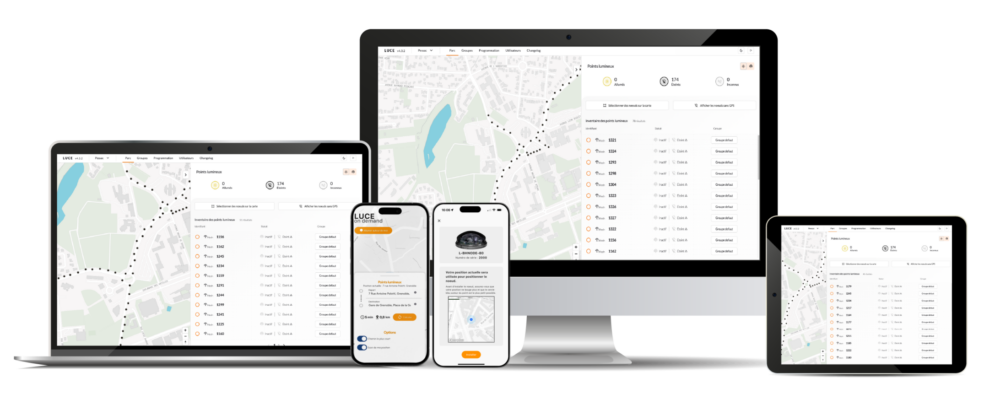
Supervision acts as a control tower for the Smart City. It does more than just turn streetlights on or off: it collects data in real-time to optimize every watt consumed.
Smart and Dynamic Control
Through supervision, the city can program lighting scenarios adapted to actual usage (weather, events, traffic flow), ensuring the right amount of light in the right place.
Remote Monitoring and Predictive Maintenance
The system instantly detects electrical failures. This responsiveness allows for a reduction in maintenance costs of 30% to 50% by eliminating unnecessary night-time monitoring patrols.
Why is Supervision the Key to Your Smart Public Lighting?
The integration of supervision software directly supports the energy transition objectives of local territories.
Massive Energy Savings (50% to 80%)
Smart lighting enables the modulation of light intensity (dimming) during the night. Local authorities observe an immediate drop of 50 to 80% in their energy consumption.
Rapid Return on Investment (ROI)
The cost of deploying a supervision solution is quickly offset by the generated savings. The average observed ROI ranges between 3 and 7 years..
How Does Public Lighting Supervision Work?
The system is based on a robust and secure IoT (Internet of Things) architecture.
Communicating Controllers and Sensors
Smart modules are installed in cabinets or directly on the lamp posts (nodes). They use protocols such as LoRaWAN or NB-IoT.
SaaS Software Interface
Data is centralized on a dashboard accessible by technical departments. This interface allows for precise tracking of energy performance and maintenance alerts.
FAQ: Everything About Smart Public Lighting Supervision
Q: What is the difference between remote management and smart public lighting?
Remote management (telemanagement) is the technology for remote control.Smart public lighting is the overall result: a network that uses remote management and supervision to optimize urban services.
Q: Is supervision compatible with existing LED luminaires?
Yes, our solutions are interoperable. They can make any LED park smart, regardless of the manufacturer.
Q: What is the impact on light pollution?
Supervision allows for the creation of "dark grids" by lowering intensity during off-peak hours, protecting local biodiversity while maintaining safety.
Key Figures to Remember
This topic speaks to you? Would you like to discuss it with our team?
Write to us today. We’ll be delighted to connect with you and support you every step of the way!
