




Electrical Cabinet for Public Lighting: Design, Safety and Intelligent Remote Management
Electrical Cabinet for Public Lighting: Design, Safety and Intelligent Remote Management
The public lighting electrical cabinet is the operational heart of an urban lighting network. It no longer simply distributes electricity to lamp posts. Today, it protects installations, controls switching cycles, and integrates with remote management systems.
In a context where local authorities must reduce energy consumption while ensuring user safety, the electrical cabinet becomes a strategic lever. Designed in France by BH Technologies, a tech company based in Grenoble, our solutions help modernize public lighting infrastructure across the territory.
Why an Electrical Cabinet is Strategic in a Public Lighting Network?
A Central Role in the Network
Every streetlight depends directly on the electrical cabinet. It distributes power, protects circuits, and coordinates control devices. In other words, it structures the entire network.
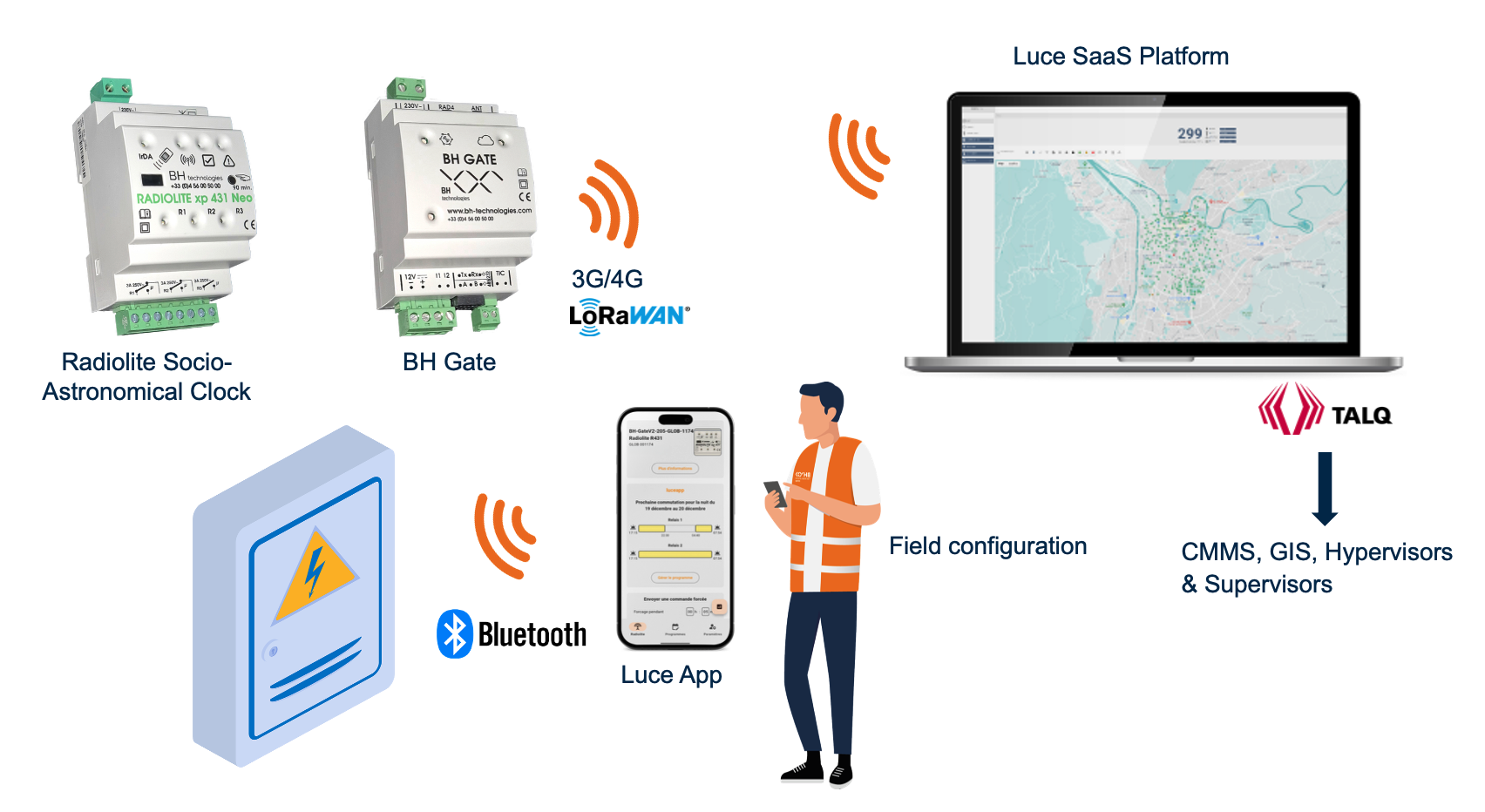
Without a properly adapted cabinet, it becomes impossible to optimize lighting schedules, integrate a Radiolite astronomical clock: intelligence at the heart of public lighting cabinets , or remotely supervise the park. Therefore, it forms the technical foundation for any intelligent public lighting strategy.
Essential Safety
Safety remains an overriding priority. The cabinet must protect circuits against short circuits, absorb surges, and meet French regulatory standards.
Because it is installed outdoors, it must also withstand climatic conditions and mechanical stresses. Robust design limits the risk of incidents and extends equipment lifetime.
A Tool for Energy Management
Energy optimization starts at the cabinet. With appropriate programming and the integration of an astronomical clock for public lighting, it automatically adjusts switching times according to natural cycles.
As a result, cities avoid unnecessary lighting and reduce their energy bill. The cabinet thus becomes a concrete tool for energy transition.
The Electrical Cabinet: A Natural Hub for Remote Management
Enfin, l’armoire constitue le point d’intégration naturel d’une solution de télégestion d’éclairage public intelligent. Elle centralise les données, transmet les alertes et permet un pilotage à distance.
Paired with solutions developed by BH Technologies, it transforms a classic network into a connected infrastructure capable of evolving over time.
Key Technical Features for a Public Lighting Electrical Cabinet
Compliance with Standards
An electrical cabinet must comply with low-voltage installation standards and outdoor equipment requirements. This compliance ensures the safety of technical staff and users.
Adherence to regulatory frameworks is a non-negotiable requirement for all local authorities.
Environmental Resistance: IP and IK Ratings
Installed in an urban environment, the cabinet is exposed to rain, dust, and temperature fluctuations. A suitable IP rating protects internal components from water and particles. Additionally, a high IK rating ensures resistance to impacts and attempted vandalism. These factors determine overall system reliability.
Surge Protection
Atmospheric phenomena and network variations expose installations to unpredictable surges. A well-designed cabinet includes specific protection devices to safeguard LED luminaires and electronic modules.
This protection reduces maintenance costs and secures public investment.
Connected Electrical Cabinet: Towards Smart Public Lighting
The evolution towards smart cities largely depends on infrastructure that can communicate. The connected electrical cabinet plays a decisive role here.
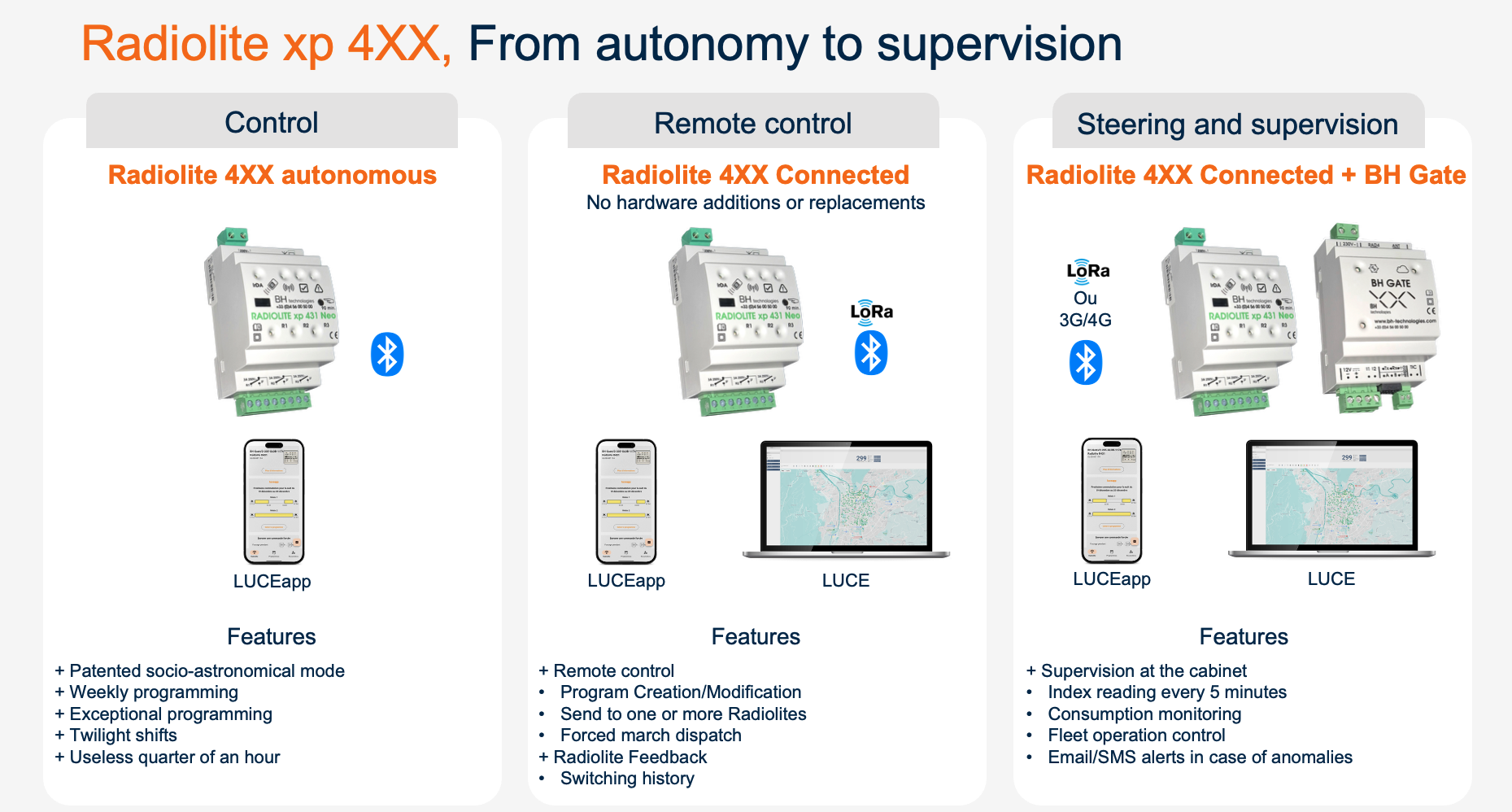
Grâce à l’intégration de modules radio ou IoT, elle collecte des données d’exploitation et les transmet vers une plateforme de supervision. Les collectivités peuvent ainsi suivre l’état des départs, identifier les anomalies et ajuster les paramètres sans intervention physique.
This approach reduces technical travel and improves responsiveness. In the long run, it even allows some failures to be anticipated through data analysis.
Modernizing an Existing Electrical Cabinet
Not every municipality replaces its installations entirely. Fortunately, it is possible to modernize an existing cabinet.
Adding a connected module or a professional astronomical clock allows the installation to be integrated into a remote management system without full reconstruction. This progressive approach optimizes investment while improving energy performance,
making modernization accessible even for constrained budgets.
Use Cases by Type of Local Authority
In a small town (fewer than 5,000 inhabitants), simplicity of operation and cost control are often the priorities. A connected cabinet offers centralized control without excessive complexity.
In a metropolitan area, priorities shift. Multi-zone control, segmented schedules, and centralized supervision become essential. The cabinet then fits into a larger intelligent lighting architecture.
In an industrial zone, safety and continuity of service dominate. A high-performance cabinet ensures operation adapted to the specific constraints of economic activity.
Frequently Asked Questions About Public Lighting Electrical Cabinets
What is the difference between a box and an electrical cabinet?
A box is generally more compact and intended for limited installations. The cabinet, by contrast, aggregates extended functions of protection, control, and remote management.
Can a remote management solution be integrated into an existing cabinet?
Yes, if the appropriate modules are added. This evolution allows a park to be connected progressively.
Is an electrical cabinet compatible with LED luminaires?
Yes, if it includes control devices suited to modern LED technologies.
Technical Study Request
You want to optimize the management of your public lighting network? Contact us!
Our technical teams support you in designing a secure, scalable, and connected solution.
